
What is embedded iPaaS?
The right choice for product integrations
An embedded iPaaS (embedded Integration Platform as a Service) is a cloud-based integration platform that SaaS companies embed directly into their product to offer native, in-app integrations and workflows to customers. Instead of routing users to a separate integration hub, your end users can discover, configure, and manage integrations without ever leaving your application.
Unlike traditional iPaaS—built primarily for internal IT and operations teams—an embedded iPaaS is purpose-built for product and engineering teams who need to ship scalable, reusable customer integrations as part of their product roadmap.
How an embedded iPaaS works
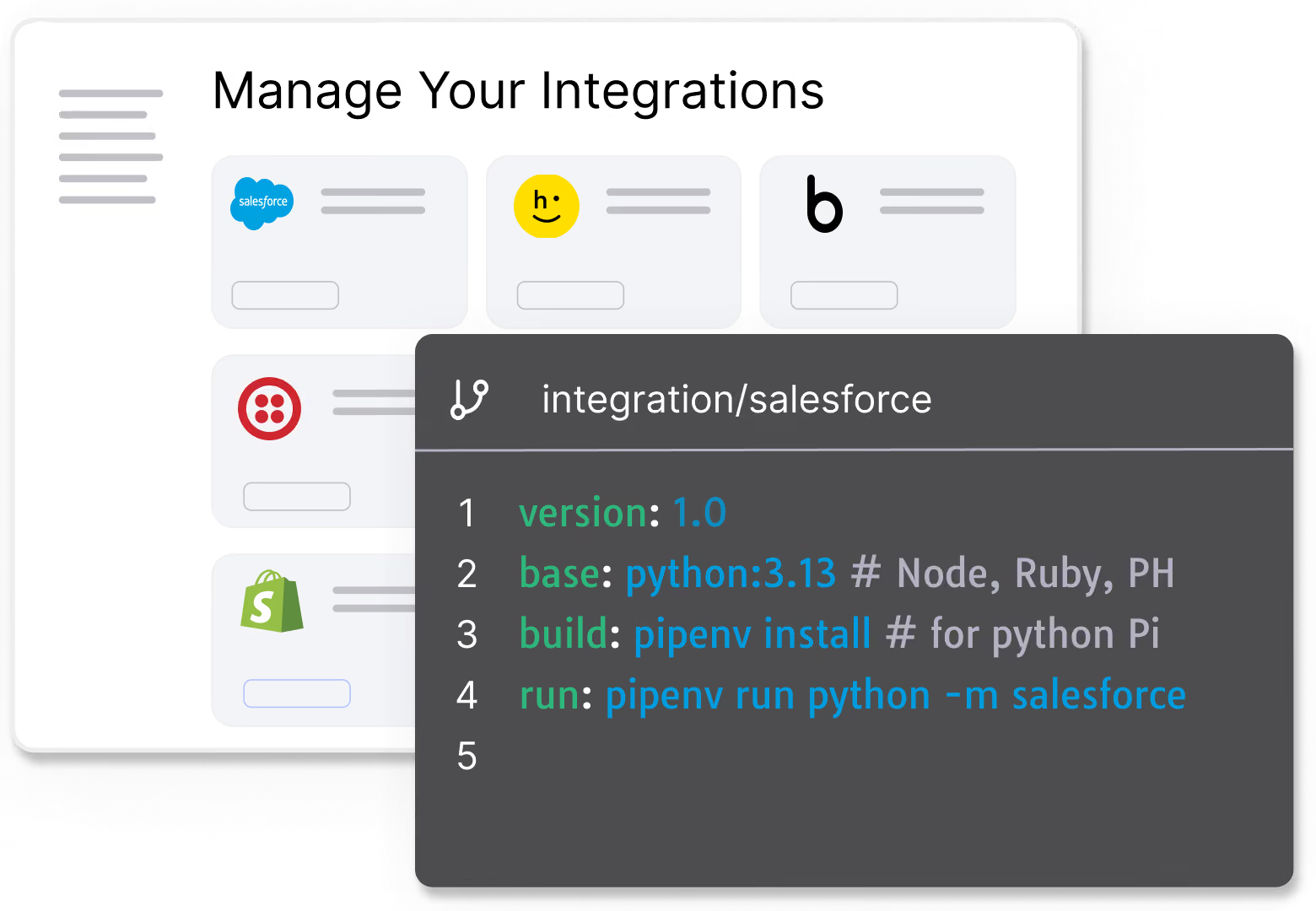
An embedded iPaaS sits underneath your product as a multi-tenant integration layer that handles connectivity, authentication, orchestration, and monitoring for all your customer integrations. You expose it as part of your product experience via in-app integration catalogs and configuration flows that feel native to your UI.
Core capabilities typically include:
- Pre-built connectors to SaaS apps (CRM, ERP, marketing, support, eCommerce, data tools etc.).
- Managed authentication (OAuth, API keys, token refresh, credential storage) for every integration.
- Multitenant configuration, so the same integration can be reused across many customers with different settings and credentials.
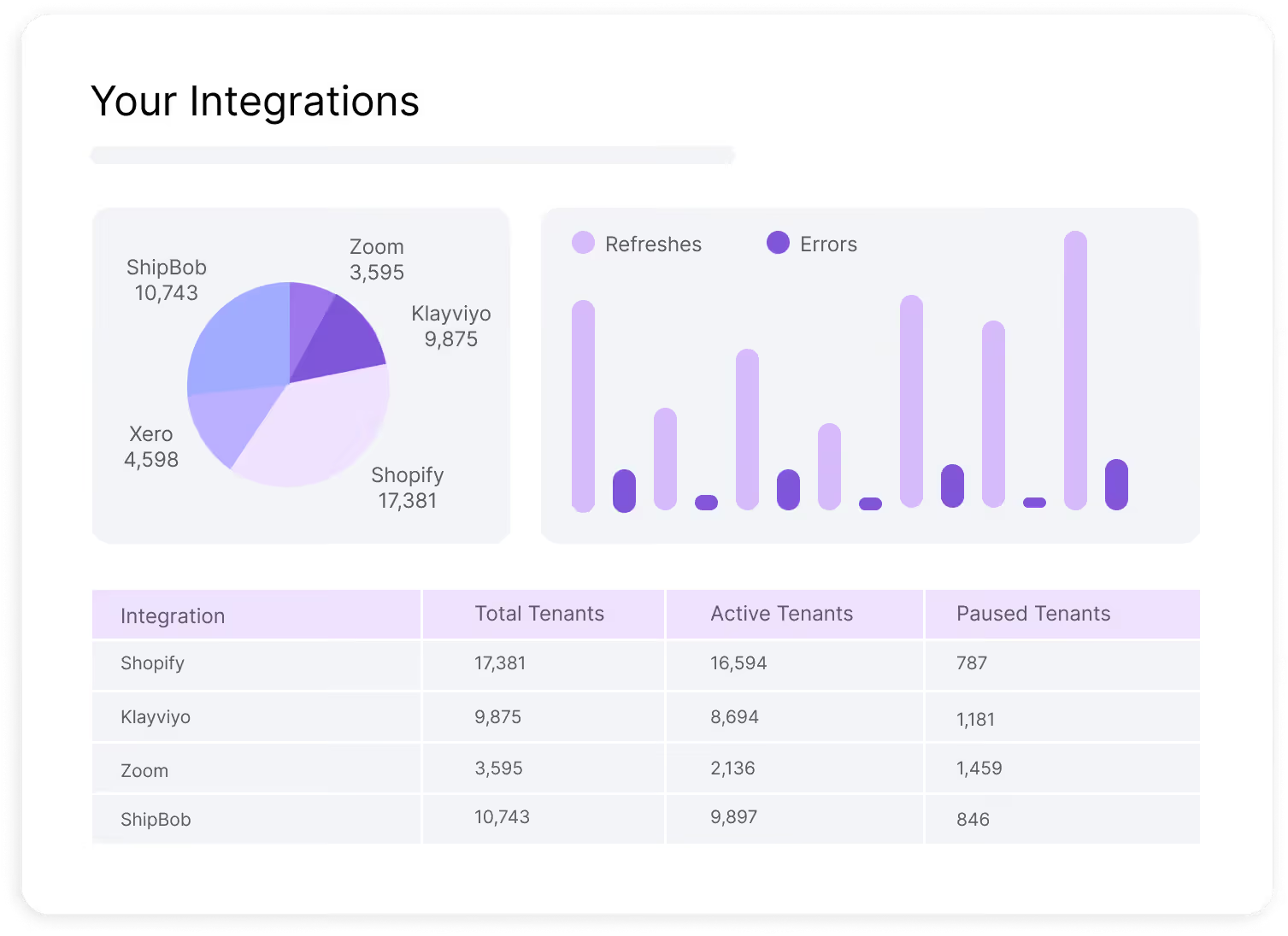
- Monitoring, logging, alerting, and error handling to keep integrations reliable at scale.
This model lets your team design customer-facing integrations once, then configure and deploy them repeatedly across your customer base with minimal incremental engineering work.
Embedded iPaaS vs traditional iPaaS
Both embedded and traditional iPaaS platforms solve integration and automation problems, but they’re built for different owners, use cases, and end users.
When embedded iPaaS is a better fit
- You build a B2B SaaS product and integrations are part of your core value proposition.
- Your customers expect plug-and-play connections to their CRM, ERP, help desk, data warehouse, and other tools—without leaving your app.
- Your team is stretched thin building bespoke, one-off integrations and maintaining them as APIs change.
If your primary goal is to automate internal workflows across your own tools (not customer-facing integrations), a traditional iPaaS is usually the better fit.
With an embedded iPaaS, you get:
- A fully managed infrastructure for running and monitoring integrations at scale.
- Pre-built connectors and abstractions instead of maintaining every API yourself.
- A multi-tenant model and integration marketplace patterns built-in.
Who should use an embedded iPaaS?
Embedded iPaaS is designed for software companies that need to deliver integrations as a product capability, not as a behind-the-scenes IT project.
It’s especially valuable for:
- B2B SaaS platforms with integration-heavy value propositions (CRM, RevOps, billing, HRIS, support, analytics, logistics, vertical SaaS).
- Product-led organizations where integrations drive activation, adoption, and expansion.
- Teams managing dozens or hundreds of customer-specific integrations that must be monitored, updated, and supported over time.
- Companies competing in mature markets where depth and breadth of integrations are part of how you differentiate and retain customers.
If you’re feeling pressure from prospects who ask “What do you integrate with?” on every call, an embedded iPaaS gives you a scalable, productized answer.
.avif)
The Product & Engineering Guide to Choosing the Right Integration Platform
Benefits of an embedded iPaaS for SaaS companies
An embedded iPaaS helps you ship more integrations, faster, while reducing your long-term maintenance burden.
Faster time-to-market for integrations
Better customer experience
Reduced engineering and support load
Scale and reusability
Stronger differentiation and revenue impact
With Pandium, your team can:
- Use an integration hub to centrally manage all customer integrations, including configuration, credentials, and monitoring.
- Generate integration code with Pandium’s integration code generator, accelerating development while enforcing consistent patterns and best practices across integrations.
- Reuse integrations across customers with tenant-level configuration and observability, instead of rebuilding similar integrations over and over.
- Give product, engineering, and go-to-market teams clear visibility into integration usage, adoption, and health so they can prioritize roadmaps and customer success.
- Launch and grow a branded integration marketplace inside your app.